The first band stamped on stage with stony looks on their faces, like they were firemen about to confront a serious blaze. They jerked through their songs with hard, deliberate movements that I had to admit, looked pretty cool.
It was the kind of place I would have killed to be at when I was 16. A grimy, empty storefront repurposed as a venue, packed with opportunities to bump (and throw) elbows with some of the most tapped in people on the block. I pinch myself when I’m in these lively spaces I’m still not sure I’m cool enough for. But as I looked around, to my horror, I realized my friends and I were some of the oldest people there. I also realized we were the only people moving to the music, or interacting with the band; the only people who seemed present at all.
Looking through the room it was like a zombie outbreak had hit an art school. The teens and early twenty somethings’ impeccably stylish outfits were paired with a glazed look, a nervous bearing, and frequent peeks at phones and trendy digital cameras. Nobody was talking to each other; no new friends were made, no new loves kindled, not even old arguments rehashed. I thought, as generations before me, what is wrong with the kids these days, but I felt it was more than that.
For one, we were a little too close in age. But while I was lucky (?) to be a college sophomore when the pandemic forced everything online, many of these people were young teens, and lived some of the most intensely formative years of their lives predominantly on the internet. It was as if the pandemic had cleaved our generation in two. I felt a rush of empathy, but thought to myself: if these are the tapped in kids, brave enough to make it here, how gone were the young people that stayed home?
It is reductive to blame it all on social media, but there is a reason why Jonathan Haidt’s idea of an internet-ravished “anxious generation” has caught on. There is growing evidence that more time on social media make us less mentally and physically well; these effects are most pronounced among young people, still developing socially. Social media can isolate us, erode our self-esteem, depress and polarize. Most of us don’t need a trove of data to tell us that; it feels bad when we scroll for a long time, when we notice ourselves snubbing the real people around us, and when we can’t help but click on the next video. More than half of adults in the U.S. cut back on their social media use last year. People want to get offline, and are trying in a variety of ways, using black and white filters on their phones, setting time limits for certain apps, or putting their phones out of reach from their bed.
It shouldn’t be shocking that it is so hard. We are socially wired creatures, drawn to each other by a biological drive as powerful as hunger or exhaustion. It is essential to our being; without connection, loneliness drives us insane. But we have created incredibly sophisticated social substitutes that feed this drive without really satisfying it. Social media is designed to keep us from leaving it; it wants a monopoly on our attention and is finetuned with complex algorithms that do just that. The companies that create these sites have access to more data about us than any entity in history, and have the monetary, social, and political resources to make almost anything happen. They also have growing incentives to make it more addictive as a part of an industry where engagement dictates share price, and in an economy more and more oriented to digital goods. On top of this, social media companies are almost completely unfettered by regulation; it would’ve made the tobacco companies of the 1950s blush. It’s no wonder that so many of us as individuals feel powerless to put down our phones. No addiction has ever had so many resources behind it; and none has been able to roll so many of our vices together.
However, change is undeniably in the air. Last December, Australia put into effect a law limiting social media usage by people under 16. When I first read about it, it seemed laughable. The sites they were banning seemed archaic: Instagram and X, but not AI chatbots or Roblox. I remembered how many times as a teen I simply lied about my age online, or found a clever workaround (a specialty of teens in every generation).
But as I thought about it more, I realized the ban signals a lot more. It is a precedent for the next generation of social media; if we can ban TikTok for children under 16, we can ban Character AI. It also shows that we want to. I think we have reached a tipping point, where we are starting to recognize the effects of social media as what they are: part of an urgent public health issue. There are a growing number of places in the world where enough people are willing to create protections that can stand up to the power of social media companies, that can take the pressure off of us as individuals. Globally, things are starting to move fast, and no doubt will continue to do so in the next couple years. In the U.S. we are starting small, with school districts and states considering restrictions for young people. But it is a start nonetheless.
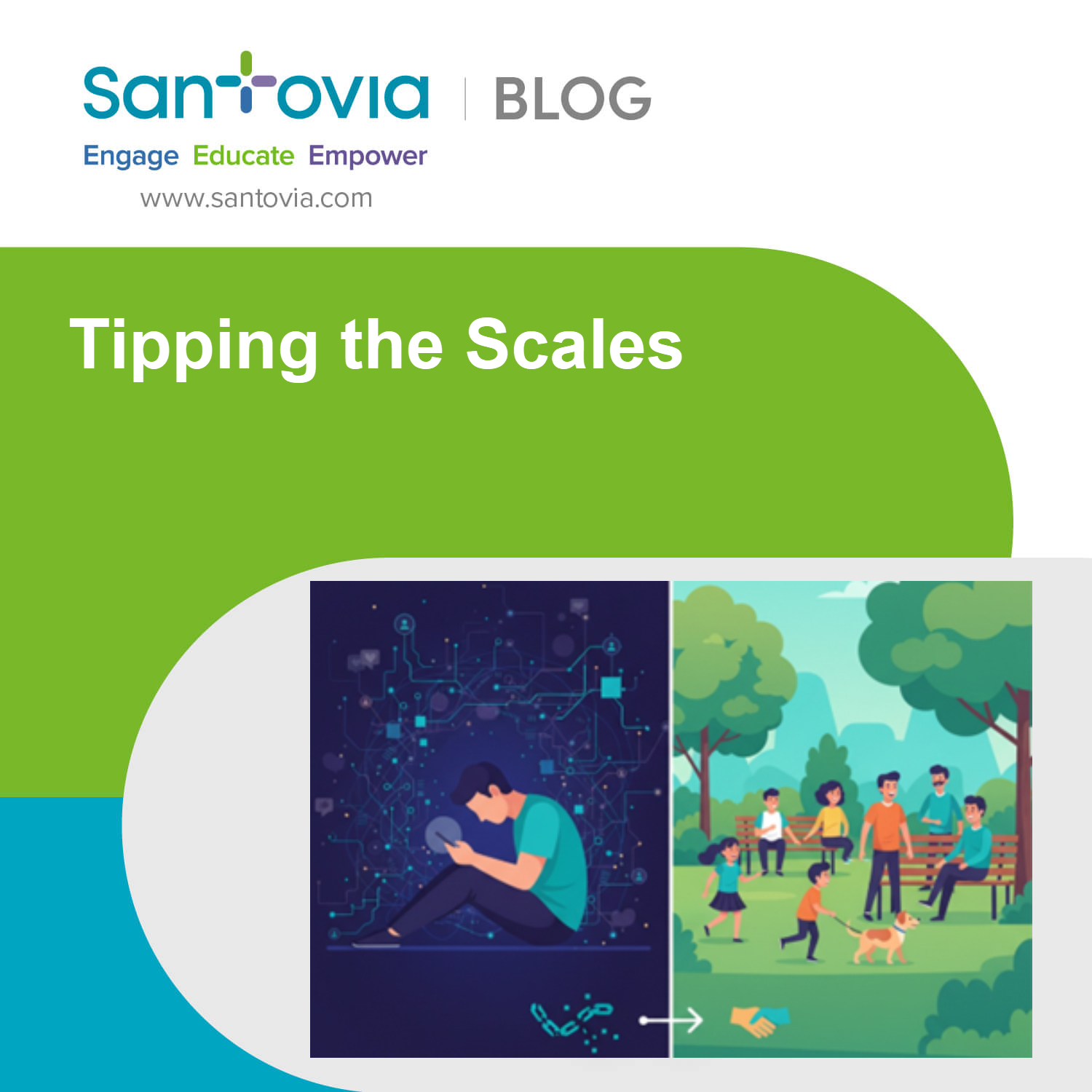
A ban alone, however effective, will not fix our relationship with social media. Kids (and adults) need somewhere to go when they leave the internet. They need third places, infrastructure in the real world: playgrounds, art studios, even the spaces under the bleachers. They also need education, literacy: the tools to understand and navigate AI, algorithms, and their own mental health.
But we should be optimistic; the very drive that makes social media so alluring is the same one that will bring us back to each other. The kids I shared that noisy room with are proof of the power of that impulse – they were there despite a horrific and inhuman introduction to the social world – and they will become more comfortable in those places, and everywhere. Human beings are like magnets; bring us close enough, and remove the obstacles in our way, and we will come clanging together. The real world is addicting too; it is full of life and color, the promise of the next set of eyes, the touch of a friend, and the possibility of tangible, physical belonging. All we need to do is tip the scales it its favor.
I’d like to thank Jeff Handcock for talking to me about this subject and for the brilliant work of the Stanford Social Media Lab.
Written by Seth Husney