There’s something cruel about the heat of a high-altitude desert. The air is as thin and sharp as a blade, and the dry sun, which seems impossibly close, bleaches your bones like a cattle skull in an O’Keeffe painting. I experienced this firsthand kicking stones down the street of Madrid, New Mexico a few years back.
You can’t drink the water in Madrid (pronounced MAD-rid); it’s an old mining town, and the groundwater, if there is any to speak of, is tainted by that past. It took a second trip to Madrid to realize the black stones I was kicking around were pieces of coal.
When each gulp of water comes from a bottle, you realize its worth. It is a cliché that “you never miss the water until the well runs dry,” but when you literally experience running out of water, it doesn’t seem so trite. This isn’t a normal part of life in the United States, but as the climate becomes increasingly unpredictable, it’s inevitable that more of us will know this kind of thirst.
Water is fundamental to our being. It is not just something we drink and use to grow our food, but it is what washes us in the morning, cools us off in the summer, and gives our towns and cities life, both plant and animal. Our disregard and disrespect for our water resources, like much these days, feels almost nihilistic.
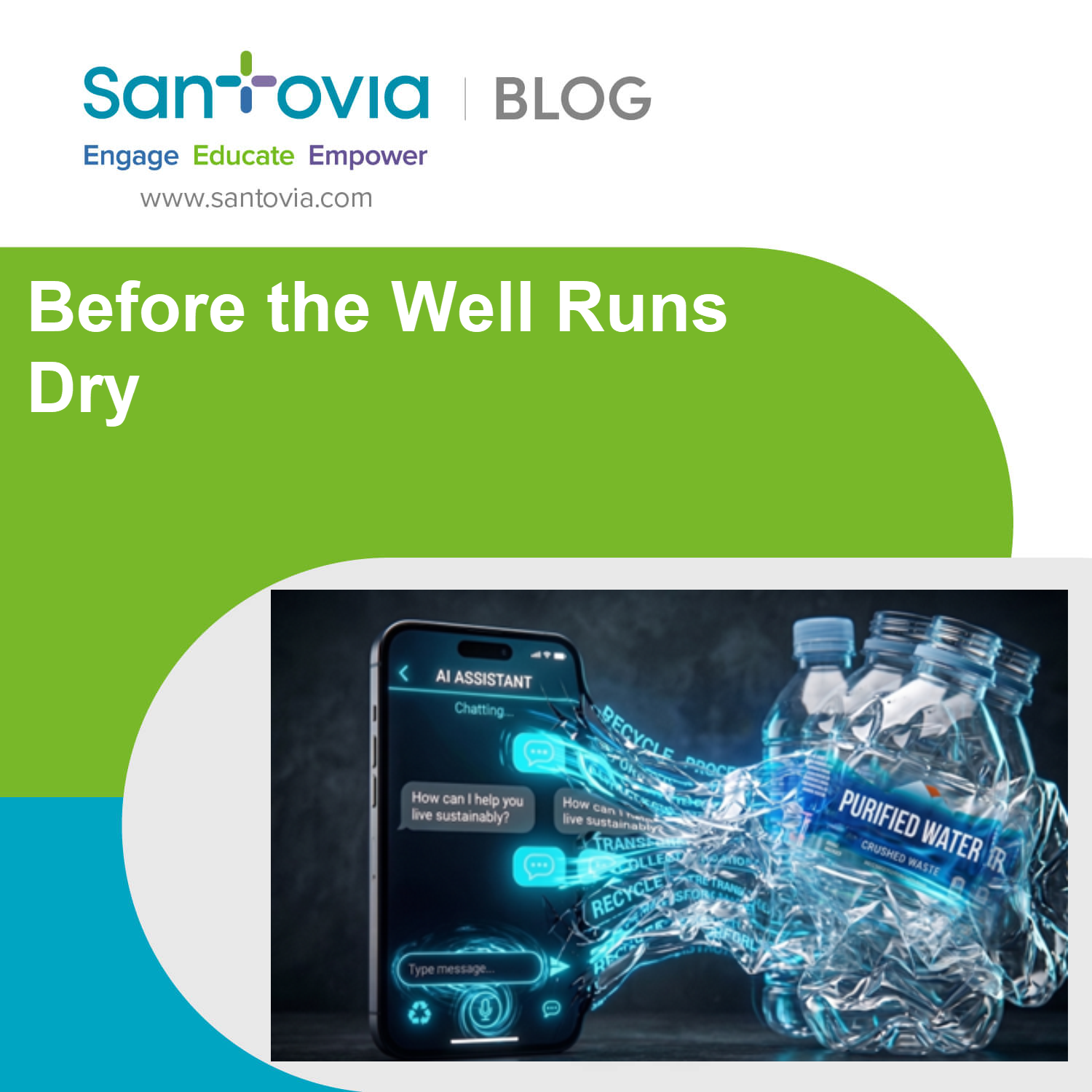
In 2026, the threats to our water supply are too many to count, but maybe the most novel and concerning is the construction of data centers. Data centers, the physical infrastructure that store the internet, use an immense amount of fresh water. A large data center consumes about five million gallons of water a day, about the same amount as a town the size of Atlantic City. Their energy needs are also staggering, and the process of extracting that energy from fossil fuels, which power data centers, drinks up water too. Many data centers are being built in areas already facing water stress, and, not only do they use a great deal of water, they can also poison aquifers and overwhelm water treatment infrastructure.
We are just entering the data center boom. We are building these facilities because they are the brain of AI, and as our usage of artificial intelligence skyrockets, so will the impact of data centers on our water.
A 100-word prompt in Chat GPT uses about a bottle of water. I can’t express how precious a bottle of water felt in Madrid.
Today, there will be over 2.5 billion prompts sent to Chat GPT. When Chat GPT publicly launched in 2022 there were about a million users. In late 2025 that number was almost a billion, and there is every indication that growth will continue.
There is something deeply ironic about this reality. We are facing increasing water shortages across the world and simultaneously betting our economic future on a technology that uses up and poisons the very thing that sustains us. When I think back to Madrid, the putrid water and the “gob” piles of toxic waste, I feel uneasy with the idea that we’ve learned our lesson.
There is no doubt that this is going to affect human health. Chronic dehydration taxes our kidneys, brains and hearts. And while we cool our data centers with water, we may find ourselves overheating. When we overheat, we struggle to breathe – asthma and COPD worsen; as does heart disease. When our general health weakens, infectious disease can thrive. Many of us are aware of this, so why don’t we do anything about it?
In an era of such highly visible violence, some of the most insidious threats to our wellbeing are the ones that can’t be captured in a seven second vertical video. Water degradation and scarcity are examples of this; what professor and author Rob Nixon has called “slow violence.” This term describes the kind of damage to the environment and human health that unfolds over longer periods of time, whose causes are difficult to identify because the violence itself is often hard to witness. You can’t see lead poisoning or chronic malnutrition happen in real time. The violence of health misinformation, a lack of access to care, or patient education, is not sensational. But the effects are no less real. It is time we highlight these less visible crises; we owe it to our own wellbeing to compensate for their damaging invisibility.
At the end of the day, taking care of our water is taking care of our health; after all, it makes up 60% of us. What other chemical compound can make such a boast? Something so elemental to who we are deserves our recognition and respect.
On good days, it feels like every discomfort in the world was paired with a perfect solution. Last summer the Midwest was inundated with what I learned was called “corn sweat” — great blankets of humidity released by the scores of Midwestern cornfields that make a hot day unbearable. But providence, or geography — whichever you prefer — put lake Michigan smack in the middle of corn country. Even on a cold day, I can feel the relief of that fresh water on my skin.
It’s easy to forget the basics in a world so overcomplicated by human design. But it is these fundamental experiences, the magic of a cold drink of water, or the purification of a bath, that make us who we are. The simple things are the ones we all share. We owe it to ourselves not to take these fundamentals for granted, to spotlight the unseen and the overlooked, and to protect the well before it runs dry.
Resources:
From the Georgia O’Keeffe Museum in Santa Fe, NM:
https://www.georgiaokeeffe.net/rams-head-blue-morning-glory.jsp
Written by Seth Husney